Teeth Whitening in Korea: Costs, Methods, and What to Expect
From blue light whitening to porcelain veneers, here’s how Korean dental treatments compare to the US in price, speed, and results!

- How should you choose a teeth whitening clinic in Korea?
- Which Korean dental clinics can you compare before booking?
- How much does teeth whitening in Korea cost?
- What causes yellow teeth?
- Why do so many international visitors get teeth whitening in Korea?
- What teeth whitening and cosmetic options are available in Korea?9

- Which clinic fits which traveler?1
- 5 recommended dental clinics by purpose5
- Frequently asked questions about teeth whitening in Korea
- Final thoughts
Teeth whitening in Korea usually costs about ₩300,000 per session and can brighten teeth by two to three shades in a single visit, but the right method depends on why your teeth are yellow. Compare the cause of the discoloration, the treatment type, the clinic’s language support, and the written price before you book.
Last updated: September 2026
How should you choose a teeth whitening clinic in Korea?
Choose by cause of discoloration and treatment type first, then compare clinic experience, interpretation support, the written price, and how much time your trip allows.
Yellow teeth are not one problem. Surface stains from coffee, tea, or tobacco respond well to cleaning and standard whitening, while discoloration inside the tooth, such as tetracycline staining, may need a different option like porcelain veneers. Asking what is causing the color before asking for the cheapest whitening session prevents paying twice for a result that was never achievable with the first method.
Work through these five criteria in order:
- Cause of the discoloration: surface stains, natural tooth color, or medication-related staining inside the tooth.
- Treatment type: cleaning, blue light whitening, or a veneer-based cosmetic option. Each one changes a different part of the result.
- Clinic experience and consultation process: whether the dentist compares options for your dental condition instead of selling one fixed package.
- Language and interpretation: confirm that English consultation or interpretation is available before arrival, since dental care is a medical service.
- Written price and time in Korea: ask for the total before treatment, and check how many visits the option needs against your itinerary.
Treatment suitability and results vary by individual. A licensed dentist must confirm what is appropriate for your teeth after an in-person examination.
Which Korean dental clinics can you compare before booking?
The five linked clinics cover different goals, from whitening-focused care to consultation-led comparisons, but the current booking page controls the final price, availability, and conditions.
| Clinic | Comparison detail |
|---|---|
| Reve Dental Clinic | Best for: travelers focused on professional whitening rather than shape correction Area: Gangnam Known for: whitening-focused treatment and modern facilities with English treatment guidance Creatrip benefits: listed in the 15% Beauty Cashback program Nearest station & exit: Not disclosed — confirm on the live booking page. Price tier: Not disclosed — confirm on the live booking page. Languages: English treatment guidance at this clinic. International-customer rating: Not disclosed — confirm on the live booking page. |
| New York Yonsei Dental Clinic | Best for: travelers who value consultation with a U.S.-licensed dentist Area: Gangnam Known for: more than 20 years of experience, with the head doctor personally overseeing treatment Creatrip benefits: listed in the 15% Beauty Cashback program Nearest station & exit: Not disclosed — confirm on the live booking page. Price tier: Not disclosed — confirm on the live booking page. Languages: English treatment guidance at this clinic. International-customer rating: Not disclosed — confirm on the live booking page. |
| Lucid Dental Clinic | Best for: comparing Lucinate, whitening, and scaling by dental condition, budget, and trip length Area: Gangnam Nearest station & exit: near Exit 3 of Eonju Station Languages: multilingual interpretation available Creatrip benefits: free reservation through Creatrip, with the decision to proceed made after consultation |
| Yonsei U Line Dental Clinic | Best for: convenient access around Gangnam Station and general dental care consultation Area: Gangnam Known for: accessible whitening treatment at more affordable prices Current price, exit, walking route, benefits, rating, and eligibility: confirm on the live booking page. |
| Jamsil The 365 Dental Clinic | Best for: travelers looking for scaling or teeth whitening around Jamsil Area: Jamsil, Seoul Current price, exit, walking route, languages, benefits, rating, and eligibility: confirm on the live booking page. |
How much does teeth whitening in Korea cost?
A single whitening session in Korea usually costs around ₩300,000, which is significantly less than in the US or Europe, where similar treatments often cost several hundred dollars per session.
Korea’s whitening technology and equipment are internationally recognized while the cost stays comparatively low. Even including airfare, combining treatment with a trip can work out cheaper and more convenient for some travelers. Scaling and polishing are cheaper still, and many clinics that welcome international visitors offer these services through Creatrip with free language interpretation support and no additional booking fees.
Since Korea’s tax refund program for beauty medical services ended in 2026, post-visit benefits are the practical way to reduce the total. Creatrip’s Beauty Cashback is a post-visit points reward for selected beauty and dental bookings: after treatment you submit your receipt and leave a review on Creatrip to receive points. The standard benefit is 10%, and Creatrip Membership users can receive 15% cashback on eligible bookings.
How to book Korean beauty & medical treatments online safely?
What causes yellow teeth?
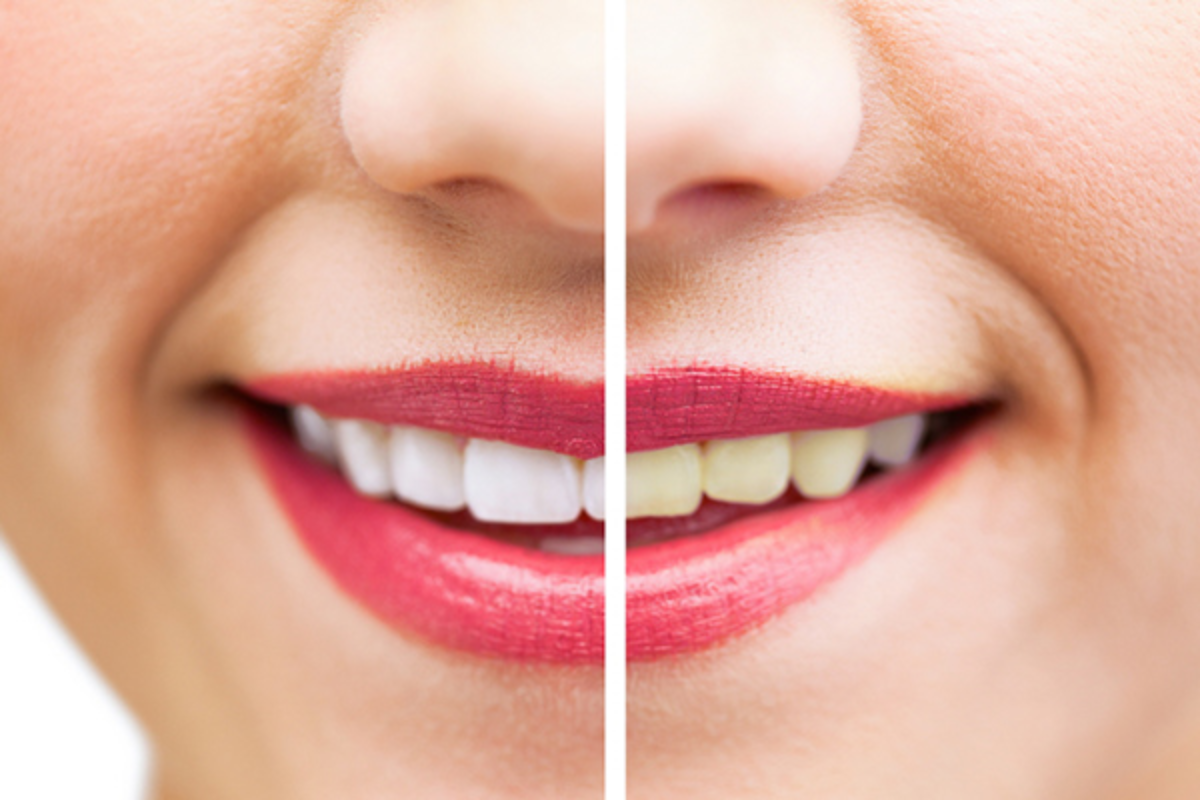
Yellow teeth come from five main causes: eating habits, genetics, smoking, poor oral hygiene, and medication — and the cause decides which treatment can actually help.
If any of the points below sound familiar, keep reading to understand which whitening option matches your situation.
Source: Health Chosun
1. Eating habits
Regularly drinking dark-colored beverages like coffee, tea, or red wine, or eating strongly colored foods like curry, berries, or tomato sauce, can stain your teeth over time. These pigments stick to the surface and gradually build up, causing yellowing. Even with daily brushing, they can seep into tiny cracks in your enamel, leaving your teeth looking dull and discolored.
On average, Koreans drink at least 2 cups of coffee every day. Want to learn their secrets to keep their teeth clean?
[Blog] Korean Oral/Teeth Care Secrets
2. Genetics
The thickness, color, and texture of tooth enamel vary from person to person, and these traits are usually inherited. If your parents have naturally yellowish teeth or thinner enamel, you might experience the same. Some people also have naturally darker dentin, which makes their teeth appear less white.
3. Smoking
Nicotine and tar in tobacco cling to your teeth, creating yellow-brown stains. Long-term smoking not only discolors teeth but also increases the risk of gum disease, bad breath, and even oral cancer, affecting overall oral health.
4. Poor oral hygiene
Neglecting regular brushing or flossing allows plaque and tartar to build up on your teeth. Bacteria in plaque produce compounds that can yellow your teeth and may also lead to cavities and gum disease. Maintaining good oral care like brushing twice a day, flossing, and getting regular dental cleanings can help prevent yellowing.
5. Medication effects
Certain medications can impact tooth color. For example, tetracycline antibiotics taken during childhood can leave pigments in the dentin, causing permanent yellowing or graying. In these cases, regular whitening treatments may not be effective, and options like porcelain veneers are often recommended.
Why do so many international visitors get teeth whitening in Korea?
Korea combines internationally recognized cosmetic dental technology, fast treatment, and prices that are far lower than in the US or Europe, which makes whitening practical even on a short trip.
1. Internationally recognized technology

While dentists in many countries often focus primarily on treating dental problems, Korean dentists receive extensive training in professional cosmetic dental procedures. With a strong cultural emphasis on aesthetics and appearance, Korea has developed advanced cosmetic dental care faster than many other countries.
Korea is also home to some of the world’s most advanced dental technology research centers, and dentists here have extensive clinical experience and highly developed skills. Beyond traditional whitening methods, Korea offers unique treatments like ZERONATE and MINISH whitening, designed to be effective without damaging your teeth.
2. High-quality service at affordable prices
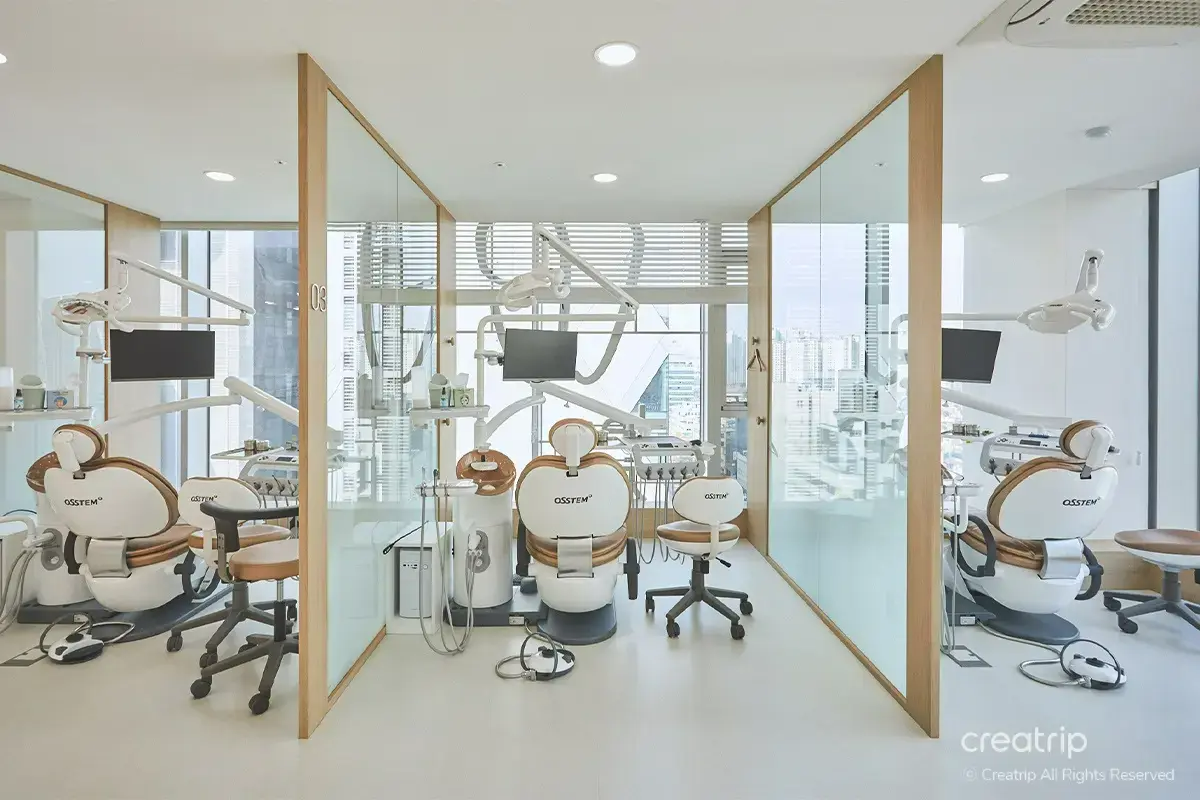
Korea’s teeth whitening technology and equipment are internationally recognized, yet the cost is surprisingly affordable. A single session usually costs around ₩300,000, which is significantly less than in the US or Europe, where similar treatments often cost several hundred dollars per session.
Even including airfare, getting teeth whitening in Korea can work out cheaper and more convenient, making it a great option for those who want to combine treatment with a trip.
3. Teeth whitening is a trend
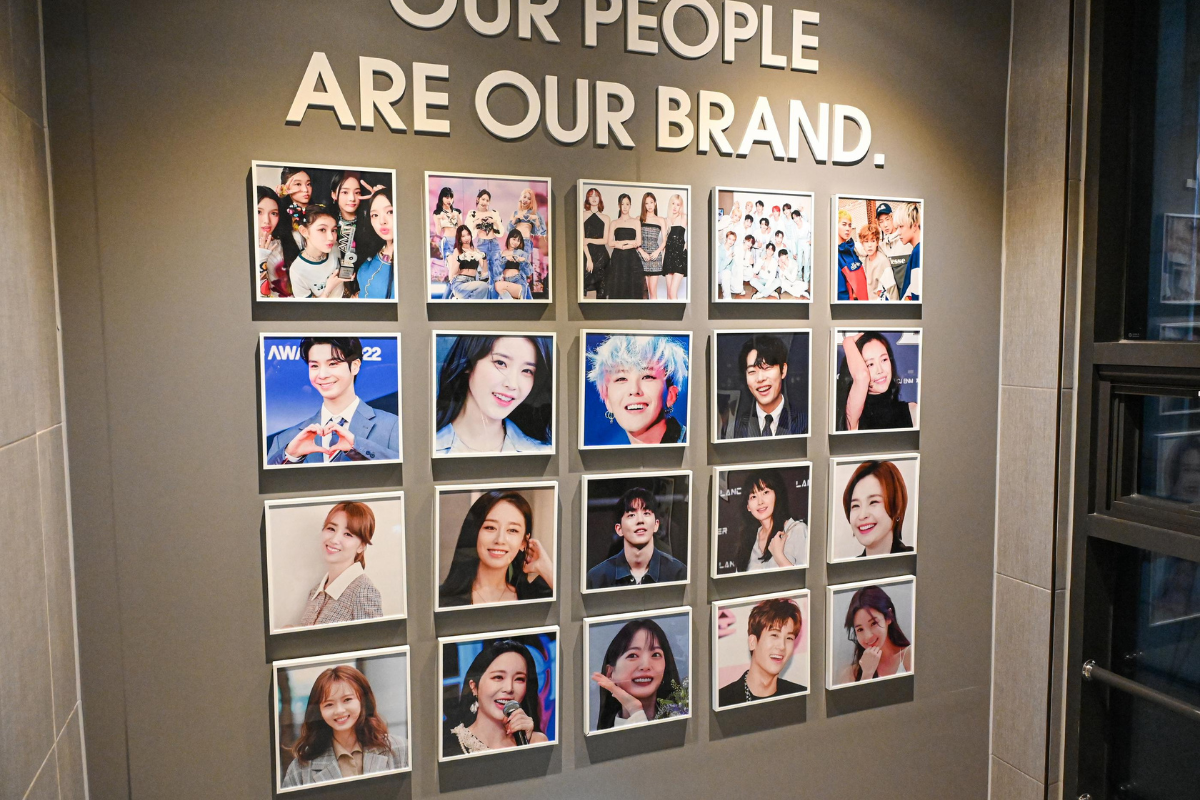
Many Korean celebrities are known for their bright, flawless smiles, and the combination of white teeth with bold lips has become a global beauty standard. Several actors and K-pop stars have openly shared their experiences with teeth whitening, which has helped make the procedure even more popular.
Now, anyone can access the same techniques and receive treatment from the professional dental teams behind these celebrity smiles, making it possible to achieve a star-worthy smile for themselves.
4. Easy for tourists to try
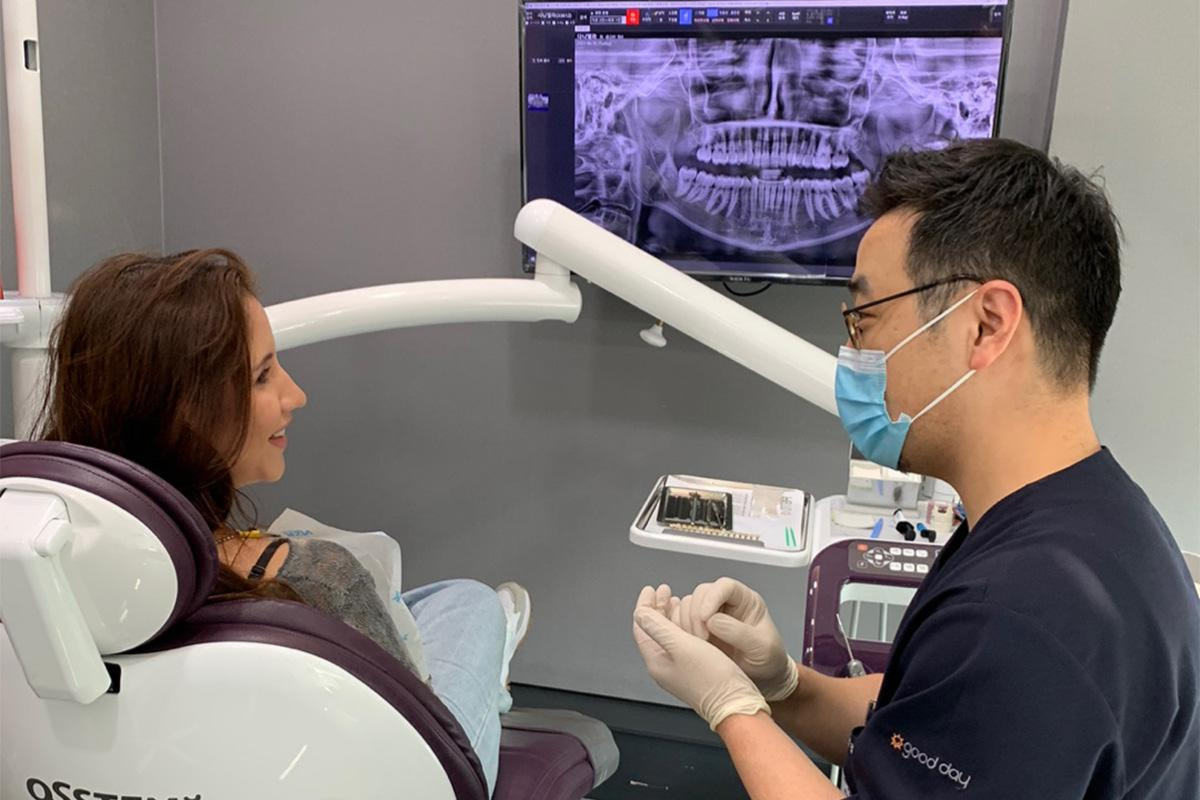
Dental care is always considered a medical service, so some travelers worry about language barriers or being treated differently as foreigners. In reality, most large dental clinics in Korea are very welcoming to international patients. Many offer English support, and some can even arrange follow-up treatments or check-ups to fit your schedule and itinerary.
On top of that, teeth whitening sessions are usually quick, so you can get treatment without disrupting your travel plans.
What teeth whitening and cosmetic options are available in Korea?
Korean clinics mainly offer four options: professional cleaning, blue light whitening, ceramic veneers, and zero-prep ceramic veneers — and they differ in how much they change color versus shape.
1. Teeth cleaning
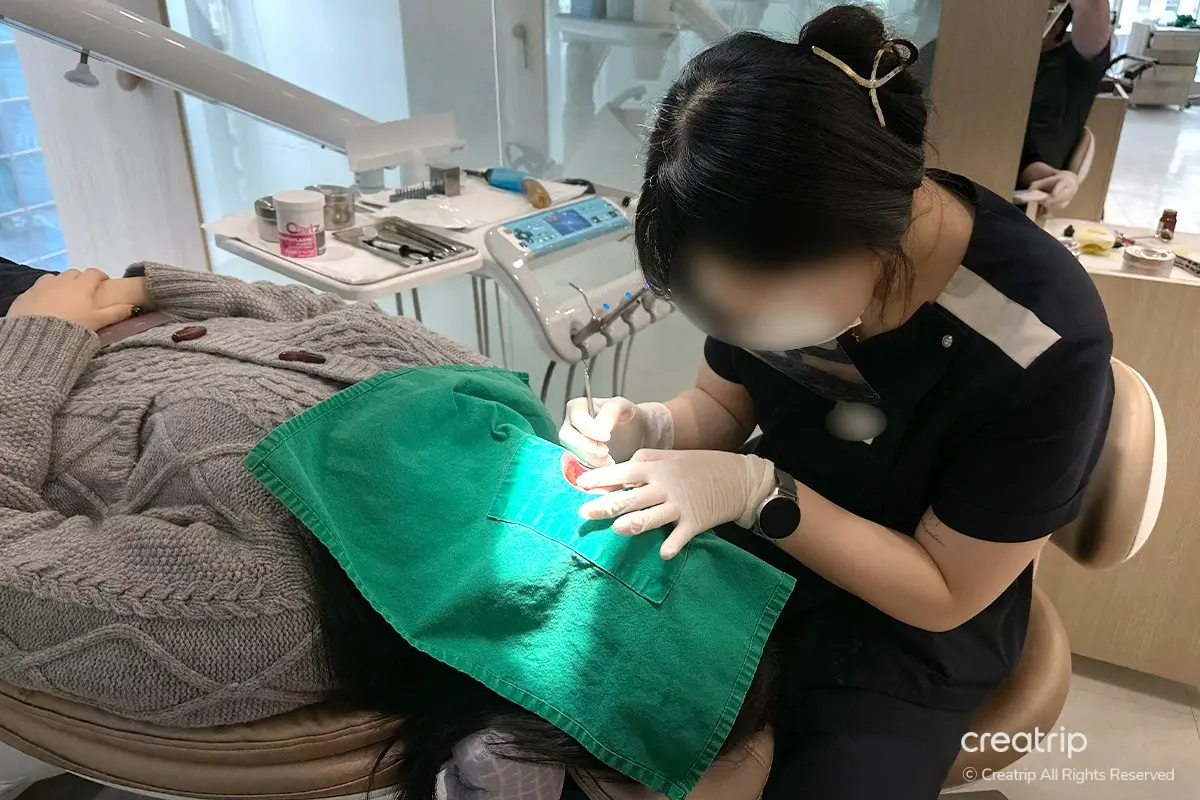
The main purpose of a dental cleaning is to remove tartar, plaque, and surface stains like those from coffee or tea. If your teeth look yellow mainly due to these surface stains, regular professional cleanings can make a noticeable difference.
Recommended clinics
[Spot] Yonsei Uline Dental (Gangnam Station Branch)
[Spot] Yonsei GOOD DAY Dental Clinic (Gangnam Branch)
2. Blue light / laser teeth whitening
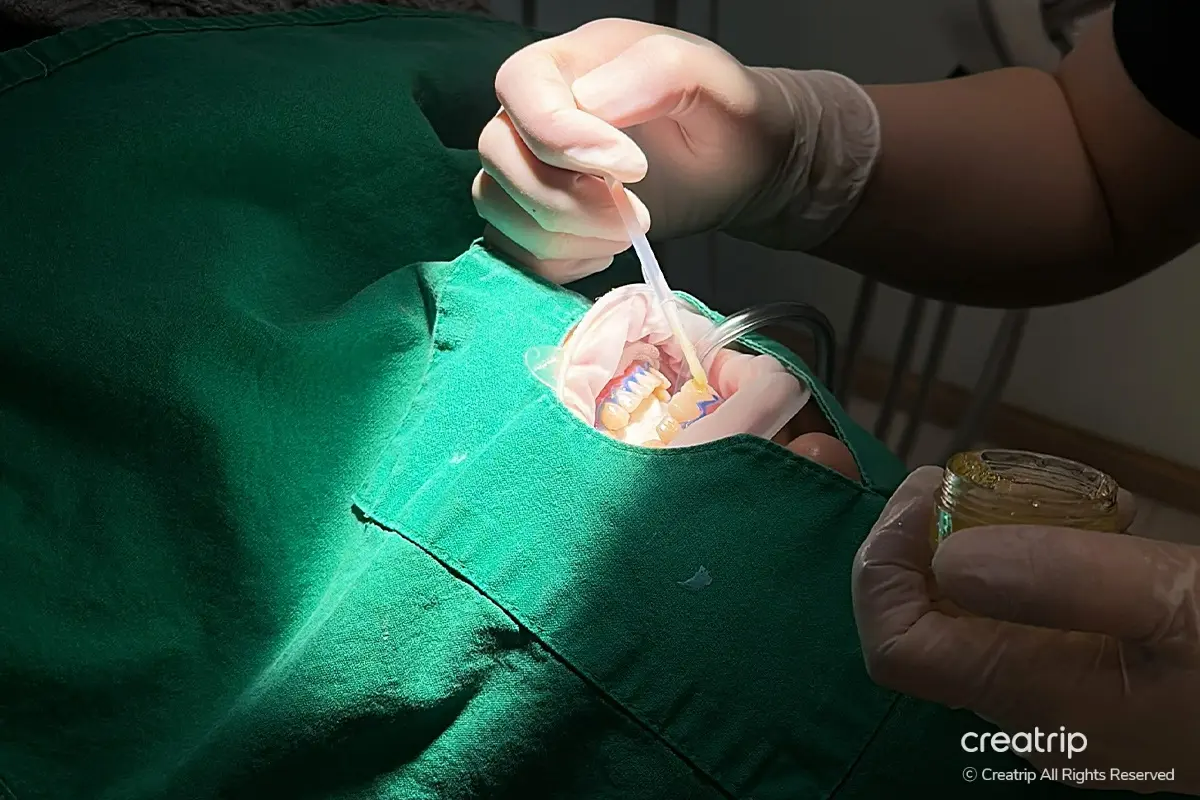
Blue light teeth whitening, also called cold light or LED whitening, is the most popular whitening procedure in Korea. The process starts with applying a whitening gel, usually containing hydrogen peroxide, to the surface of your teeth. Then, a blue light is used to activate the gel.
This activation helps release oxygen molecules that penetrate the enamel, break down pigment deposits, and make your teeth noticeably whiter.
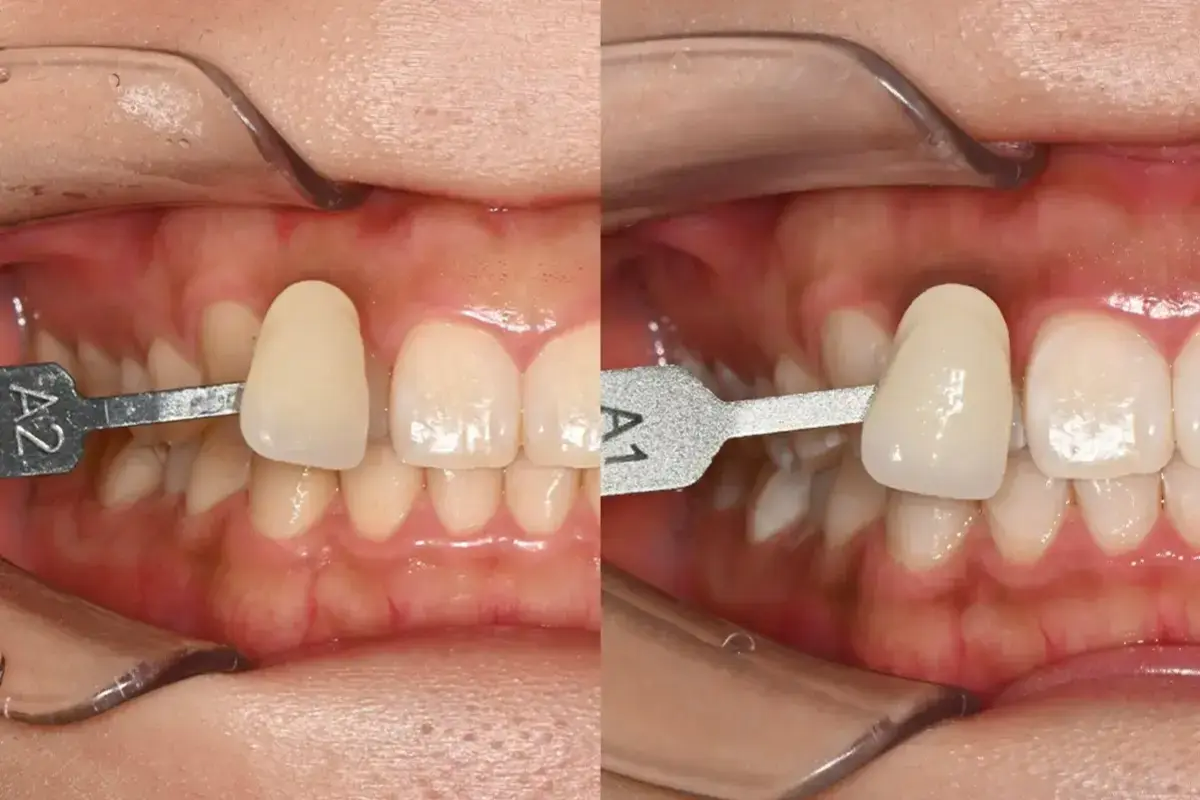
Using blue light for teeth whitening generates less heat, which means reduced tooth sensitivity and a safer treatment overall. Another benefit is that you can see noticeable results in a short amount of time. Many clinics in Korea now use a combination of different light wavelengths to speed up whitening while minimizing side effects.
Korean dentists have extensive experience with teeth whitening and access to high-quality equipment and products. On top of that, the cost is surprisingly affordable, often just a fraction of what similar treatments cost in the US or Europe.
Recommended clinics
[Spot] Seoul CENTUM Dental Hospital (Sinsa)
[Spot] Yonsei Uline Dental Clinic (Gangnam Station Branch)
[Spot] LE Dental (Gangnam)
[Spot] Yonsei GOOD DAY Dental Clinic (Gangnam Branch)
3. Veneers
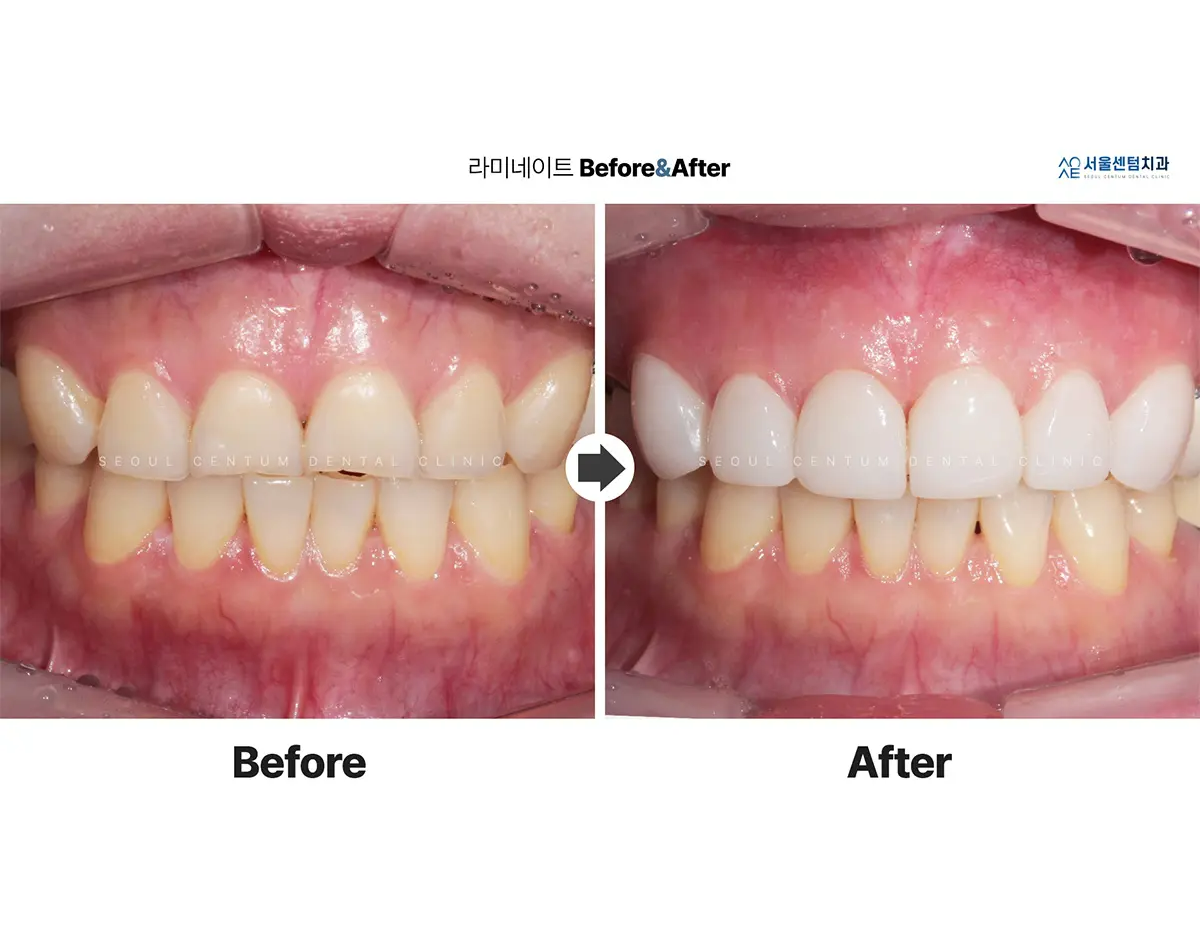
As the name suggests, this type of teeth whitening uses a thin veneer that is attached to the surface of your teeth. Veneers not only improve the color of your teeth but can also adjust their shape, length, or size. The results are longer-lasting than regular whitening treatments.
If you have permanent discoloration such as from tetracycline or want to correct the shape or size of your teeth while whitening, veneers are often the better option.
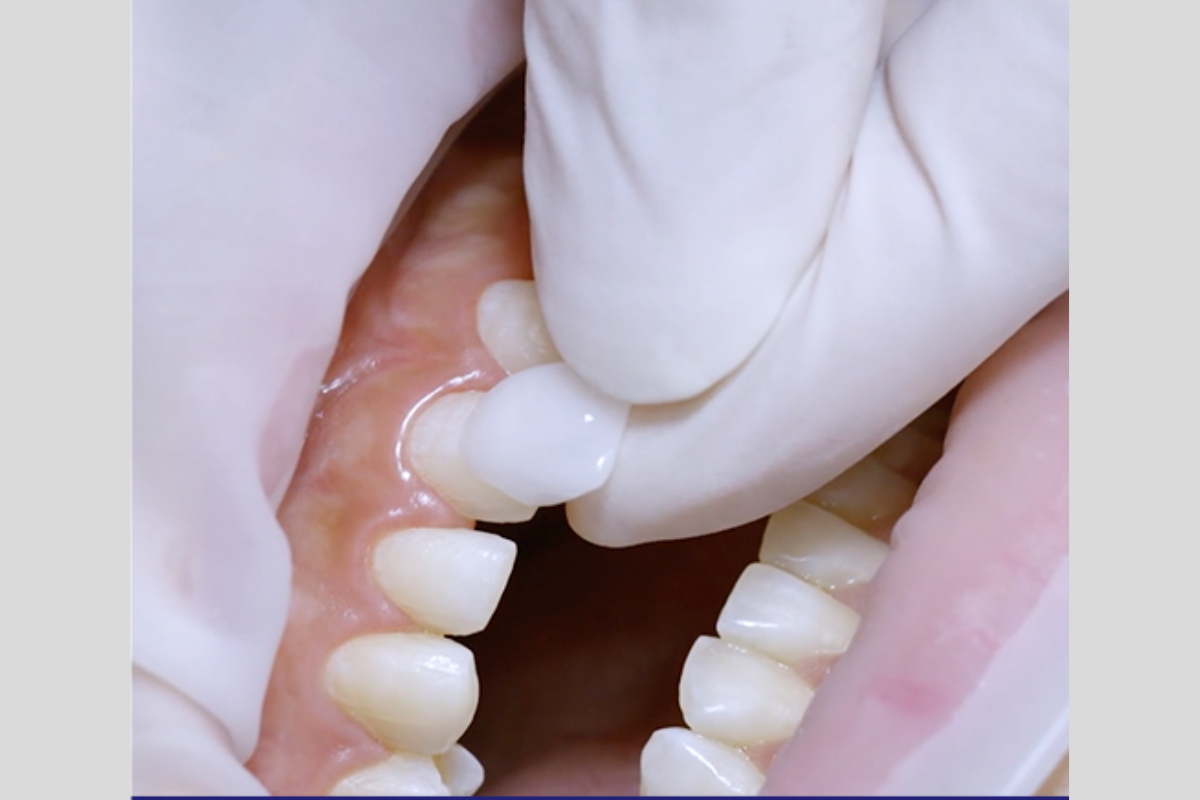
There are several types of materials used for dental veneers, with ceramic veneers being the most common. In Korea, these are often called “Laminate” and are made from a harder ceramic material.
Ceramic veneers not only look more like natural teeth, but they’re also more durable and less likely to discolor compared to resin, silicone, or polymer veneers.
4. Zero-prep ceramic veneers

Traditional ceramic veneers are relatively thick and usually require some of the tooth surface to be shaved down before placement. If not crafted carefully, they can sometimes look unnatural, almost like dentures.
Recently in Korea, “zero-prep” ceramic veneers have become popular. These veneers are thinner and require minimal removal of the tooth surface, resulting in a more natural look. Among the most popular options are TU Dental’s ZERONATE Invisible Ceramic Veneers and MINISH Dental’s MINISH Ceramic Veneer Technology.
About ZERONATE invisible ceramic veneers
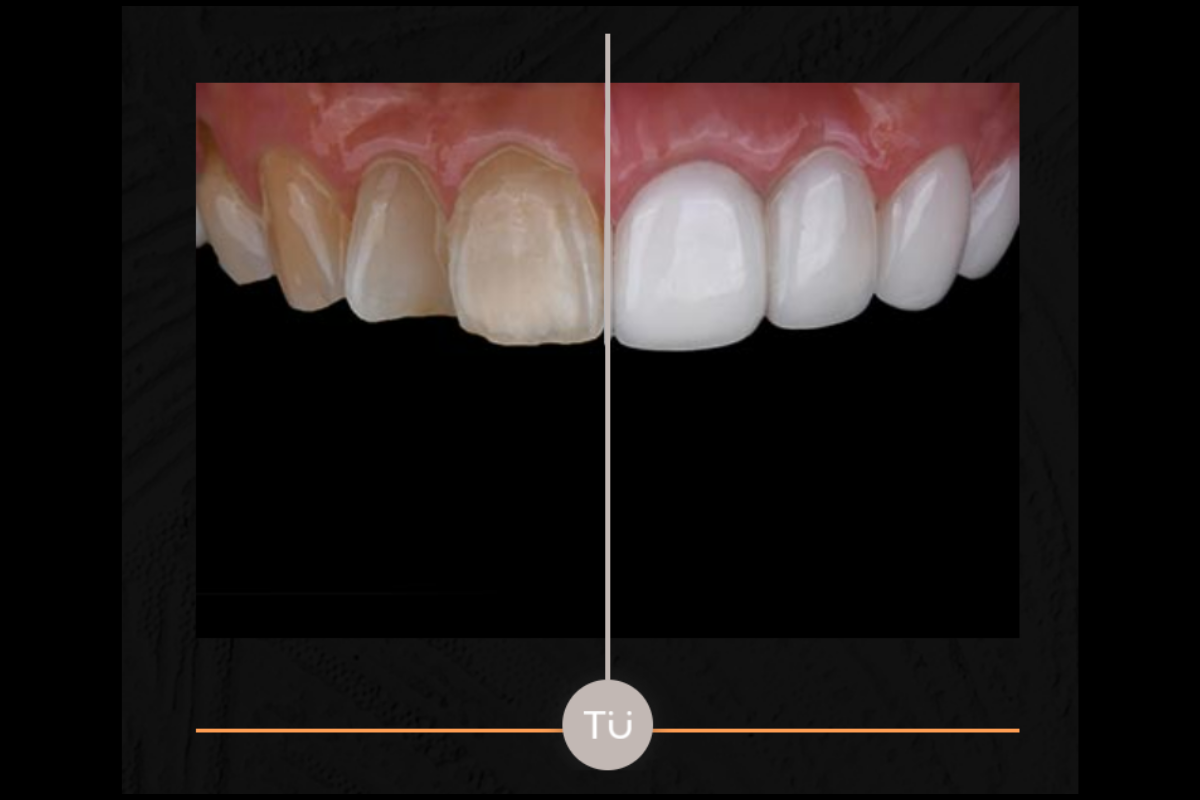
ZERONATE is an innovative dental cosmetic procedure that solves the drawbacks of traditional dental crowns and regular ceramic veneers, allowing you to change the shape and color of your teeth with almost no need to trim or affect your natural teeth, resulting in a very natural look.
- ✅ Minimal or no tooth grinding: grinding teeth can damage your natural teeth, and if a crown or traditional veneer comes off, it may look unnatural. If you’ve avoided ceramic veneers because of this, zero-prep options like ZERONATE are worth considering.
- ✅ Durable and natural-looking: ZERONATE veneers use advanced chemical bonding with enamel, providing stronger adhesion than regular ceramic veneers. Made with Swiss ceramic technology and high-quality materials like HASS and STRAUMANN, these veneers can be as thin as 0.01 mm. They’re also fully customizable, letting you choose the size and shade to match your desired look.
- ✅ Quick procedure: you can have a consultation, get your veneers made, and complete the procedure all in a single day, which suits tourists and short-term visitors. TU Dental, for example, sees many international clients from countries like Japan and Mongolia.
See more information below!
[Spot] TU Dental (Gangnam)
About MINISH porcelain veneers
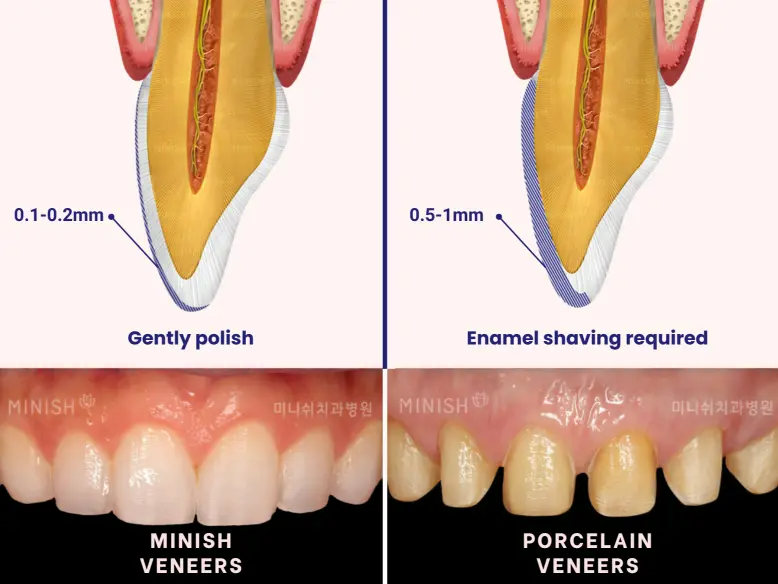
- ✅ Minimal tooth wear: MINISH is another type of no-grind ceramic veneer. Compared to traditional ceramic veneers, very little of your natural tooth needs to be removed, usually just 0.1–0.2 mm.
- ✅ Premium materials for strength and durability: MINISH Dental partners with VITA Zahnfabrik, the world’s largest dental equipment manufacturer, using Germany’s exclusive VITA ceramic blocks. These materials have a hardness similar to natural teeth, reducing impact when veneers come into contact with other teeth and making daily life more comfortable.
- ✅ Quick production and procedure: the veneer lab is located within the clinic, which shortens production time. With a morning appointment, you can complete both the examination and the veneer procedure in a single day, which suits tourists and short-term visitors.
See more information below!
[Spot] MINISH Dental Clinic (Gangnam)
[Spot] Lucid Dental Clinic | Consultation for Lucinate, Whitening, and Scaling
[Blog] Introduction to Teeth Cleaning Procedures/Prices/Recommended Clinics in Korea
Which clinic fits which traveler?
The five recommended clinics differ by focus, location, and consultation style, so match the clinic to your goal rather than to the lowest headline price.
Lucid Dental Clinic
Located near Exit 3 of Eonju Station, Lucid Dental Clinic takes a consultation-led approach. The dental team compares Lucinate, teeth whitening, and scaling according to each visitor’s dental condition, budget, and length of stay in Korea, helping visitors choose an appropriate option rather than deciding on a procedure in advance.
Multilingual interpretation is available. You can make a free reservation through Creatrip, receive a consultation, and decide whether to proceed afterward.
- Best for: travelers comparing Lucinate, whitening, and scaling before committing
- Area: Gangnam, Seoul
- Nearest station & exit: Exit 3 of Eonju Station
- Price tier: confirm on the live booking page
- Languages: multilingual interpretation available
- Known for: consultation-led comparison of procedures by dental condition, budget, and trip length
- Creatrip benefits: free reservation through Creatrip, with the decision to proceed made after consultation
- International visitors satisfied: Not disclosed
- International-customer rating: Not disclosed
[Spot] Lucid Dental Clinic | Consultation for Lucinate, Whitening, and Scaling
5 recommended dental clinics by purpose
These five clinics are grouped by the traveler they suit best, so you can shortlist one before checking the live booking page.
Reve Dental Clinic – for travelers focused on professional teeth whitening.
[Spot] Reve Dental Clinic | Teeth Whitening Consultation
New York Yonsei Dental Clinic – for travelers who value consultation with a U.S.-licensed dentist.
[Spot] New York Yonsei Dental Clinic | Free Consultation Reservation
Lucid Dental Clinic – for comparing Lucinate, whitening, and scaling based on dental condition, budget, and time in Korea.
[Spot] Lucid Dental Clinic | Consultation for Lucinate, Whitening, and Scaling
Yonsei U Line Dental Clinic (Gangnam) – for convenient access around Gangnam Station and general dental care consultation.
[Spot] Yonsei U Line Dental Clinic (Gangnam)
Jamsil The 365 Dental Clinic – for travelers looking for scaling or teeth whitening around Jamsil.
[Spot] Jamsil The 365 Dental Clinic | Scaling and Whitening
Treatment suitability and results vary by individual. Make the final decision after an in-person consultation with a licensed dental professional.
Frequently asked questions about teeth whitening in Korea
These answers summarize effectiveness, safety, timing, aftercare, and refund questions in direct, search-friendly language.
1. Are teeth whitening treatments in Korea effective for everyone?
Teeth whitening works well for most cases of surface staining or discoloration, and most visitors see a two to three shade improvement. However, if your natural tooth color is very dark or you have severe staining from antibiotics like tetracycline, the results may be limited, and a dentist may suggest a different option such as veneers instead. See ZERONATE at TU Dental Clinic for how zero-prep veneers approach this.
2. Can people with cavities or gum disease get teeth whitening?
It is best to treat cavities or gum disease first. Whitening during inflammation can worsen these conditions, and the whitening gel cannot work evenly across damaged or decayed surfaces. Ask the clinic to check your teeth and gums during the consultation and confirm whether treatment should be postponed. Consultation-led clinics such as New York Yonsei Dental Clinic review your dental condition before recommending a treatment. Cleaning and scaling are often recommended first, and you can compare cleaning options in teeth cleaning in Korea.
3. Can I whiten my teeth while pregnant or breastfeeding?
There is no evidence that whitening harms a baby, but for safety it is generally not recommended during pregnancy or breastfeeding. Speak with your dentist and your doctor before booking any cosmetic dental treatment, and consider postponing whitening until after this period. A consultation can confirm whether a simpler cleaning is acceptable in the meantime.
4. Will teeth whitening damage my teeth?
Professional whitening breaks down surface stains without damaging the tooth structure. Some temporary sensitivity may occur, but it usually goes away. If sensitivity persists, try toothpaste for sensitive teeth or consult your dentist for special treatments or fluoride applications. Serious complications are rare at licensed clinics, but you should still confirm the product, the concentration, and the aftercare plan before treatment.
5. Do I need a dental cleaning before whitening?
Yes. Cleaning removes plaque and tartar, allowing the whitening agent to work evenly and deliver better results. Without it, stains under the tartar layer stay visible even after whitening, and results look patchy. Many Korean clinics pair scaling with whitening in one visit, and current cleaning prices are listed in teeth cleaning procedures and prices.
6. What is the difference between at-home whitening and professional clinic treatments?
Dental clinics use higher-concentration whitening agents and professional lighting, so results are faster and more noticeable, and treatments are supervised by professionals. At-home products have lower concentrations and need to be used over time before you see results. If you want visible change during a short trip to Korea, a clinic visit is the more practical choice, and booking through the platform keeps reservation free of extra fees.
7. Appointments are often listed as “3 times.” Does that mean 3 separate visits?
Not usually. “3 times” typically refers to repeating the process of applying whitening gel and shining the light during a single session. After completing all three rounds, your teeth can become 2–3 shades whiter in one visit. Confirm the meaning with the clinic before booking so you can plan your itinerary correctly. If you are unsure how the Creatrip booking flow handles clinic confirmations, see how to book Korean beauty and medical treatments safely.
8. How long do whitening results last?
Results generally last 1–2 years, depending on your diet and lifestyle. Regular care and follow-up treatments can help maintain your brighter smile. Coffee, tea, red wine, and smoking shorten the effect noticeably, so the habits that caused the original staining are the strongest predictors of how long your result lasts. See Korean oral and dental care secrets for daily maintenance.
9. Are there foods I should avoid after whitening?
Teeth are more prone to staining in the first 48 hours after whitening. Avoid strongly pigmented foods and drinks such as coffee, cola, red wine, and curry, and try to refrain from smoking. Follow the clinic’s written aftercare instructions and keep the appointment for any follow-up check the dentist recommends. Whitening-focused clinics such as Reve Dental Clinic provide aftercare guidance in English.
10. Can tourists get a tax refund for teeth whitening in Korea?
It depends on the clinic. Ask the dental staff before paying, and if eligible, make sure to show your passport to claim the refund. Korea’s tax refund program for beauty medical services ended in 2026, so post-visit Creatrip cashback is now the more reliable saving: 10% for standard bookings and 15% for Creatrip Membership users on eligible bookings.
Final thoughts
That’s a complete guide to the most popular and advanced teeth whitening treatments in Korea. If you’ve been struggling with yellow teeth or just want to refresh your smile, consider booking a check-up with a Korean dentist. A professional whitening treatment could be the perfect way to boost your confidence on your next visit to Korea.
For the best experience, research clinics thoroughly, book appointments in advance, and contact Creatrip Support (help@creatrip.com) who can help arrange translation services and coordinate your visit. Treatment suitability and results vary by individual. Make the final decision after an in-person consultation with a licensed dental professional.
Book all things trending in Korea on Creatrip! If you have any questions or concerns, please leave a comment below or send us an email at help@creatrip.com! You can follow us on Instagram, TikTok, Threads, and Youtube to stay updated on all things Korea!
Check below to see more!